
Functional tea innovation combines tea’s caffeine, catechins, and polyphenols with botanicals, adaptogens, probiotics, or vitamins to match your wellness preferences. You’ll find convenient formats such as ready-to-drink bottles, powders, shots, and sparkling teas, but ingredients can alter flavor, stability, and nutrient viability. Look for transparent doses, substantiated claims, and sourcing details: traditional use doesn’t prove clinical benefit. As personalized blends and sustainable packaging gain ground, understanding formulation choices can help you assess which products suit your needs.
Key Takeaways
- Functional teas combine tea’s natural caffeine, catechins, and polyphenols with ingredients targeting focus, relaxation, or digestive support.
- Botanicals and adaptogens such as ginger, hibiscus, tulsi, and ashwagandha add flavor and wellness appeal, but benefits vary in evidence.
- Probiotics and vitamins create new product opportunities, though heat, oxygen, and storage can affect their viability or potency.
- Emerging formats include ready-to-drink beverages, sparkling teas, powders, shots, and gels, requiring careful attention to stability and taste.
- Consumers increasingly value transparent ingredient doses, substantiated claims, traceable sourcing, sustainable packaging, and culturally informed formulations.
What Makes Tea Functional?
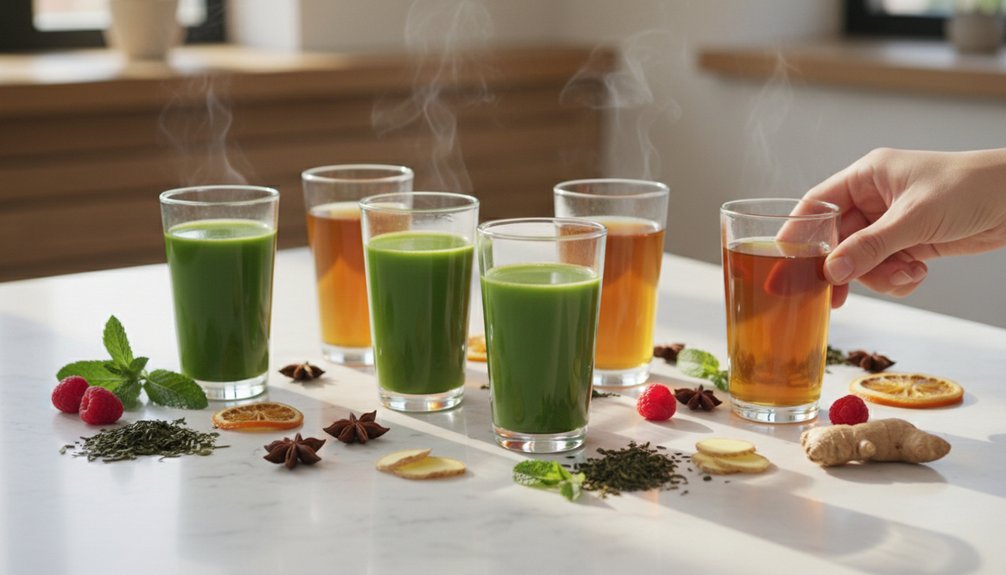
Tea becomes functional when it delivers a specific benefit beyond refreshment, typically through naturally occurring compounds or added ingredients. You can assess that benefit by examining the ingredient, dose, and evidence behind the product’s claim.
Tea leaves contain caffeine, catechins, and other polyphenols, but their levels vary by cultivar, processing, and preparation. Brewing techniques—including water temperature, steeping time, and leaf-to-water ratio—can shift the compounds extracted into your cup. That variability matters when brands promise consistent effects; a clear formulation and substantiated claims help you judge what you’re buying.
Today’s functional teas also reflect demand for measurable benefits and transparent labeling. A Tea ceremony may emphasize ritual and sensory experience, while a functional product must connect its ingredients to a defined purpose. You’ll get the clearest picture when labels identify active components and avoid implying benefits unsupported by human research.
Why Do Botanicals and Adaptogens Attract Tea Drinkers?
You may choose botanicals and adaptogens for perceived wellness benefits, though evidence varies by ingredient and formulation. Their association with stress support also appeals to you as interest in everyday wellness grows.
They can add distinctive flavors, giving tea brands new ways to meet demand for variety.
Perceived Wellness Benefits
Why are botanicals and adaptogens appearing in more tea blends? You’re seeing a shift toward products that promise more than flavor, as shoppers seek ingredients linked to specific wellness outcomes.
Botanicals such as ginger, hibiscus, and turmeric contribute distinctive compounds, including polyphenols, while adaptogens like ashwagandha and tulsi draw interest through traditional use and emerging research.
Evidence varies by ingredient, preparation, and dose, so perceived benefits shouldn’t be treated as proven clinical effects.
Brands increasingly pair ingredients to create Herbal synergy, combining complementary flavor profiles and bioactive compounds.
Clear sourcing and substantiated claims help you assess these blends without overstating what a cup can deliver.
Their cultural significance also matters: familiar plants connect contemporary products with established food and wellness traditions, giving consumers a meaningful story alongside sensory appeal.
This trend reflects demand for transparency, purpose, and everyday functionality.
Natural Stress Support
What draws stressed consumers to botanicals and adaptogens in tea? You may value a familiar ritual that pairs hydration with ingredients marketed for stress support. Adaptogens such as ashwagandha and rhodiola attract attention because research examines their potential effects on stress responses, though evidence varies by ingredient, dose, and study quality.
Herbal synergy also shapes product design: formulators combine botanicals to complement tea’s established compounds, while testing safety, stability, and interactions. You should view wellness claims critically; traditional use doesn’t prove clinical benefit, and products aren’t interchangeable with medical care.
Cultural influences matter, too. Familiar practices involving chamomile, tulsi, or other herbs can build trust and signal continuity, while contemporary consumers seek transparent sourcing and substantiated claims. This trend favors clearly labeled blends that connect daily routines with responsible, evidence-aware stress support.
New Flavor Experiences
Beyond wellness claims, botanicals and adaptogens attract tea drinkers by expanding the cup’s flavor range. You can find floral, earthy, citrus, and savory notes in blends featuring ingredients such as tulsi, ginger, hibiscus, and ashwagandha. These additions create layered profiles that distinguish products in a crowded market and give you more ways to personalize daily routines.
Formulation matters: botanical intensity, tea base, and steeping time shape aroma, bitterness, and balance. Brands increasingly pair familiar leaves with less common herbs, helping you explore novel tastes without abandoning recognizable tea formats.
Cultural tea traditions also inform these combinations, while contemporary blends adapt them for changing preferences. For you, Tea and mindfulness can meet through deliberate tasting: noticing aroma and texture makes flavor discovery part of the experience, not just a wellness claim.
How Do Probiotics and Vitamins Fit Into Functional Tea?
As functional tea expands beyond traditional botanicals, brands are adding probiotics and vitamins to deliver targeted benefits in familiar formats. You’ll find probiotic teas designed to support gut health, though live cultures require careful strain selection and processing. Heat can reduce viability, so manufacturers may use cold-brew methods, post-brew additions, or shelf-stable spore-forming strains.
Check labels for identified strains, viable counts, and storage guidance; evidence for benefits depends on the specific microorganism and dose.
Vitamin-fortified teas can help you meet nutrient needs, especially when products specify amounts per serving and account for stability during processing. Water-soluble vitamins, including C and some B vitamins, may degrade with heat, oxygen, or storage, making formulation and packaging important.
These additions extend tea’s role while respecting Traditional brewing and Cultural significance. As you compare options, assess substantiated claims, serving sizes, and fit with your diet.
How Do Functional Ingredients Change Tea’s Taste and Format?
When you add functional ingredients, you can shift tea’s flavor and aroma through their intrinsic tastes and interactions with tea compounds.
Proteins, fibers, and minerals can also change texture and mouthfeel, affecting how smoothly each sip feels.
These formulation demands are driving new formats, from ready-to-drink blends to powders and concentrated shots.
Flavor and Aroma Shifts
Functional ingredients can reshape tea’s flavor, aroma, and format as much as its nutritional profile. When you add botanicals, adaptogens, or functional mushrooms, their volatile compounds can shift a blend’s aroma and its perceived bitterness, sweetness, and astringency.
Herbal synergy matters: pairing ginger’s pungency with citrus peel, for example, can create a brighter profile than either ingredient alone. You’ll also see brands use mint, florals, and spices to balance earthy notes from ingredients such as turmeric or ashwagandha.
Aroma complexity depends on ingredient quality, processing, and brewing conditions, so formulation teams test blends across temperatures and steep times. These choices reflect demand for distinctive, recognizable flavors alongside wellness cues.
You can find them in sachets, ready-to-drink teas, and concentrated powders, each designed to preserve or deliver specific aromatic notes.
Texture and Mouthfeel
Beyond aroma, functional ingredients can change tea’s body, viscosity, and finish. Soluble fibers such as inulin can add subtle thickness, while proteins may create a creamy sensation or haze. Mineral salts and acids can shift perceived astringency by changing how tea polyphenols interact with saliva.
You’ll notice these effects vary with concentration, temperature, and steep time, so formulation needs controlled sensory testing.
The Tea leaf itself also matters: cultivar, oxidation, and particle size influence tannin release and texture. Your brewing method can amplify or soften these changes; harder water, for example, may alter extraction and mouthfeel.
Current product development favors balanced, clean finishes over heavy coating sensations, particularly in wellness-oriented blends. When you assess prototypes, compare viscosity, lubrication, dryness, and afterfeel alongside flavor, using consistent preparation and trained panels.
New Tea Formats
Functional ingredients can move tea beyond the cup into formats such as ready-to-drink shots, powdered sachets, gels, and sparkling beverages. When you add botanicals, probiotics, or protein, you may need to adjust extraction, acidity, and processing to protect stability and sensory quality.
These choices affect flavor: concentrated extracts can intensify bitterness, while carbonation sharpens aroma and perceived acidity. You can balance those effects with blending, sweeteners, or encapsulation, though each may alter ingredient release and shelf life.
Format also shapes use: sachets support precise dosing, while chilled shots suit portable routines. Tea packaging must limit moisture, oxygen, and light exposure, especially for sensitive compounds.
As you innovate, consider cultural traditions; familiar brewing cues and flavor profiles can help consumers accept functional formats without losing tea’s identity.
What Benefits Do Functional Tea Drinkers Seek?
As consumers look for more from their daily brew, they’re choosing functional teas for targeted benefits such as relaxation, focus, digestive support, and immune health. You may seek calming blends with chamomile or lemon balm, while green tea’s caffeine and L-theanine can support alertness and attention.
For digestive comfort, ginger and peppermint remain popular, though evidence varies by ingredient and outcome. Consumers also value teas containing botanicals associated with immune function, such as echinacea; these products shouldn’t replace proven prevention or treatment.
Cultural interpretations and Traditional preparations shape which ingredients you trust and how you use them, from soothing evening infusions to post-meal brews. Product labels increasingly connect these familiar practices with standardized extracts and quantified active compounds.
Check dosage, safety, and medication interactions, since natural ingredients can still produce adverse effects.
How Does Sustainability Shape Functional Tea Choices?
When choosing functional tea, sustainability can matter as much as the promised benefit. You can assess Sustainable sourcing by checking whether brands disclose origin, farming practices, and supplier standards.
Traceability helps you judge claims about organic cultivation, biodiversity protection, and fair labor rather than relying on broad green messaging. These factors matter because agricultural inputs shape both environmental impacts and ingredient quality.
Packaging also influences your choice. Look for eco friendly packaging that uses recyclable, compostable, or reduced-material designs, while checking whether local waste systems can process it.
A package’s full life cycle matters: lightweight materials may lower transport emissions, but poor recyclability can shift impacts downstream. As consumers scrutinize climate and sourcing claims, transparent evidence builds trust.
You can favor products that report measurable progress and avoid vague sustainability labels.
Which Functional Tea Formats Are Gaining Ground?
Convenience and personalization are pushing functional tea beyond the traditional bag. You’ll find single-serve powders, dissolvable tablets, ready-to-drink bottles, and concentrated shots designed for different routines. These formats let you adjust serving size and combine tea extracts with ingredients such as electrolytes, fiber, or botanicals.
Cold-brew sachets and sparkling tea also appeal when you want lower-sugar alternatives to conventional soft drinks.
At home, loose-leaf blends and precision steepers support controlled tea brewing, while portable infusers preserve preparation flexibility at work or on the move. This range doesn’t replace cultural rituals; it gives you more ways to fit them into modern schedules.
Brands are also exploring sachets with measured functional blends and refillable formats. As demand shifts toward convenience and customization, you can expect product development to span both quick-use formats and more hands-on preparation experiences.
How Can Brands Make Responsible Functional Tea Claims?
New functional formats give brands more ways to present tea benefits—and more responsibility to substantiate them. Before you make a claim, verify that the ingredient, dose, and finished beverage have relevant evidence. Don’t assume research on an isolated extract proves the same effect in brewed tea or a ready-to-drink product.
Check applicable regulations, define the intended benefit precisely, and avoid wording that implies disease prevention or treatment without authorization.
Transparent labels support marketing ethics and help you earn trust. State active ingredient amounts, serving guidance, and meaningful limitations; disclose when evidence remains preliminary.
Consumer education should explain what studies show, who participated, and whether findings apply to your product. Use qualified experts to review claims and keep substantiation records current.
This disciplined approach lets you communicate credible benefits without overstating certainty or confusing consumers.
What’s Next for Functional Tea Products?
As evidence standards rise, functional tea’s next phase will depend on precise formulations, transparent substantiation, and formats that fit daily routines. You’ll see brands pair targeted ingredients with clear serving guidance, while testing stability, bioavailability, and sensory quality throughout shelf life.
Tea and wellness will increasingly connect through personalized blends, supported by consumer data rather than broad promises. Botanical innovations may bring adaptogens, fermented extracts, and region-specific plants into familiar tea formats, but each ingredient will need safety review and credible human evidence.
You can expect more low-sugar concentrates, ready-to-drink options, and single-serve powders designed for convenience without sacrificing dose consistency. Digital traceability may help you verify sourcing and claims.
As research evolves, brands that communicate uncertainty honestly and refine products against measurable outcomes will earn lasting trust and distinguish meaningful function from trend-driven positioning.
Conclusion
Functional tea is moving beyond flavor as you seek convenient ways to support everyday wellness. Botanicals, adaptogens, probiotics, and vitamins are expanding product options, while sustainability and credible claims increasingly shape your choices. Brands that balance evidence, taste, and responsible sourcing can earn lasting trust. As the saying goes, “the proof is in the pudding”—or, here, in the cup. Watch for innovation that pairs measurable benefits with enjoyable formats, because your next tea may do more than refresh.