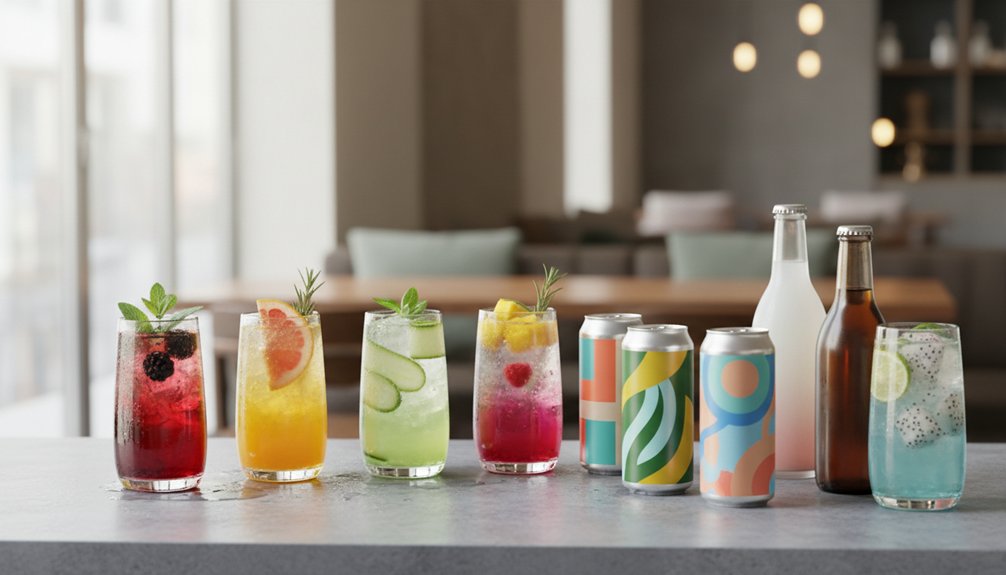
Soft drinks have evolved from pharmacy tonics and fountain mixes into standardized global brands sold in cans and bottles. Today, you’ll find citrus alongside mango, guava, berry, ginger, and herbal combinations, while stevia and monk fruit help cut sugar without sacrificing flavor. Brands also add botanicals, electrolytes, and prebiotic fibers to meet wellness priorities. Convenience, social media, and sustainability shape what you choose next. The trends ahead reveal how personalization and greener packaging may reshape your everyday drinks.
Key Takeaways
- Soft drinks evolved from pharmacy tonics and fountain syrups into standardized, branded products sold worldwide in bottles and cans.
- Flavor trends now pair familiar citrus with tropical fruits, layered berries, spices, and aromatic herbs.
- Low-sugar recipes use stevia, monk fruit, or fruit juice, supported by flavor techniques that preserve balanced taste.
- Consumers are drawn to convenient drinks that combine bold flavors, functional ingredients, and health-conscious choices.
- Future competition will center on personalized benefits, transparent ingredients, and measurable advances in sustainable packaging.
How Have Soft Drinks Changed Over Time?
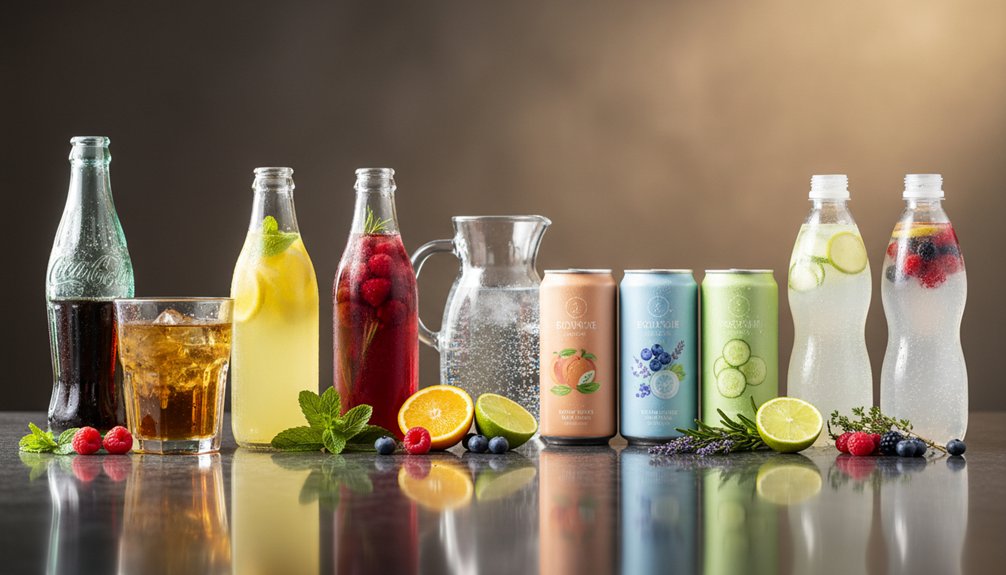
From pharmacy tonics and hand-mixed fountain drinks to global brands and zero-sugar formulas, soft drinks have evolved with changing tastes, technology, and ideas about health. You can trace that shift through production: local syrups gave way to standardized recipes, bottling lines, refrigeration, and worldwide distribution.
Carbonated beverages moved from fountain counters into convenient cans and bottles, while advertising turned familiar drinks into recognizable brands. As you shop today, you’ll find soft drinks competing with bottled water, energy drinks, and other choices for attention and shelf space.
Health concerns have also reshaped formulas, prompting smaller portions, sugar reductions, and alternative sweeteners. Digital retail and sustainability pressures now influence packaging and access, too.
The category keeps adapting, but its core promise remains: an invigorating, convenient drink designed for modern routines.
Which Soft Drink Flavours Are Gaining Popularity?
As tastes shift toward bolder, more distinctive drinks, citrus remains popular while tropical fruit, berry blends, and spicy notes gain ground. You’ll find mango, passion fruit, guava, and yuzu moving beyond niche menus into mainstream launches, where their vivid profiles signal freshness and discovery.
Exotic fruit combinations also let brands create recognizable twists without relying on familiar cola or lemon-lime cues.
Berry blends are evolving, too: raspberry paired with hibiscus or blackberry with lime offers layered flavor and a striking color story.
Meanwhile, ginger, chili, and pepper bring gentle heat, appealing to you when you want a drink with more character.
Herbal infusions such as basil, rosemary, and mint add aromatic complexity, often alongside fruit rather than alone.
These trends show how flavor now helps you choose drinks for mood, occasion, and novelty.
How Are Ingredients and Low-Sugar Recipes Changing?
Flavor innovation is changing what goes into soft drinks, not just how they taste. You’ll find recipes balancing sweetness with cleaner labels and more deliberate ingredient choices. Natural sweeteners, such as stevia and monk fruit, can reduce added sugar, though each brings distinct aftertastes and formulation challenges. Brands often blend them with small amounts of sugar or fruit juice to preserve body and familiarity.
You’re also seeing functional ingredients enter everyday refreshment: botanicals, electrolytes, prebiotic fibers, and added vitamins. These additions can shape flavor, texture, and positioning, so formulators must make benefits feel integrated rather than tacked on.
Meanwhile, advances in flavor modulation help drinks taste fuller despite less sugar. The result isn’t simply a lighter version of a classic; it’s a carefully engineered recipe where sweetness, acidity, aroma, and function work together.
What’s Driving Today’s Soft Drink Trends?
Today’s soft drink trends reflect a shift in what people expect from a drink: refreshment must also fit their health priorities, tastes, and routines. You’re also shaping demand through your appetite for discovery: bold flavour pairings, nostalgic notes, and drinks inspired by café culture turn everyday choices into small experiences.
Convenience matters, too, as portable formats and clear product cues help you choose quickly on the go.
Brands respond by studying your habits and adapting how they connect with you. Crafting marketing campaigns now means showing a product’s taste, purpose, and personality across digital channels, not simply making broad claims.
Exploring global beverage markets also reveals how local ingredients and traditions can inspire distinct offerings. Social media accelerates these exchanges, while retail visibility and trusted recommendations influence what you try and buy.
Where Is the Soft Drinks Market Headed Next?
The soft drinks market is heading toward a more personalized, functional, and lower-impact future. You’ll see brands use data and flexible production to tailor flavors, sweetness, and added benefits to distinct audiences.
Drinks that support hydration, focus, or gut health may move from niche shelves into everyday routines, while transparent ingredient lists help you choose with confidence.
Innovative packaging will make convenience smarter, through refillable formats, lighter materials, and labels that improve recycling.
Sustainability initiatives will also reshape sourcing, manufacturing, and delivery as companies work to cut emissions and water use.
Expect competition to hinge on measurable progress, not broad claims. For you, the next wave won’t simply offer more choices; it’ll connect taste, function, and environmental impact in products designed for changing habits and a more demanding marketplace.
Conclusion
Soft drinks have evolved from simple refreshment into a fast-moving test of taste, technology and trust. Today, you’ll find adventurous flavours alongside lower-sugar recipes, as brands respond to shoppers who want both enjoyment and better choices. One telling signal: the World Health Organization recommends keeping free sugars below 10% of daily energy intake, pushing reformulation into the spotlight. As you explore what comes next, watch for drinks that pair bold flavour with clear ingredients and credible benefits.