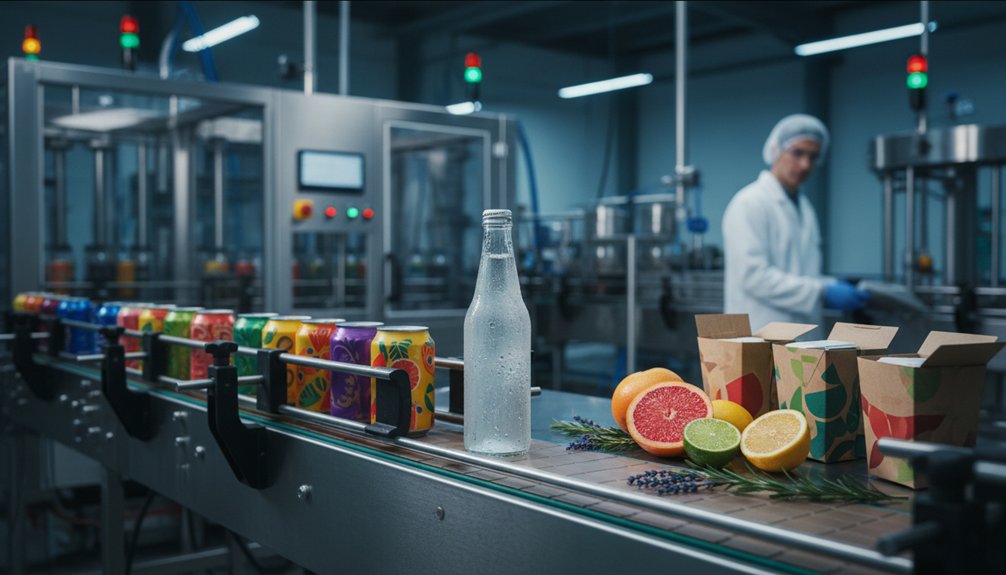
In 2026, you’ll see the soft drink industry shift toward lower-sugar recipes, functional ingredients, distinctive flavors, and more sustainable packaging. Sparkling water, ready-to-drink tea and coffee, and premium mixers are gaining attention as consumers seek convenient options with clear benefits. Producers are using AI and connected systems to improve efficiency and traceability, while packaging rules push greater use of recycled materials. Growth will depend on credible claims, accessible prices, and rapid responses to changing preferences. The trends below show what’s driving this shift.
Key Takeaways
- Health-conscious consumers are driving demand for low- and no-sugar drinks, functional ingredients, and transparent, credible health claims.
- Flavor innovation blends familiar fruits with botanicals and regional ingredients, while seasonal launches help brands attract trial and repeat purchases.
- Sparkling water, ready-to-drink tea and coffee, and premium mixers are key growth categories, with products tailored to different occasions and channels.
- Recycled packaging, lightweighting, and deposit-return systems are reshaping supply chains as companies respond to sustainability rules and consumer expectations.
- Digital tools can improve production, traceability, and trend detection, while brands must balance innovation, affordability, regulation, and competition.
How Is the Soft Drink Market Shifting?

As consumers scrutinize sugar, ingredients, and environmental impact, the soft drink market is shifting toward low- and no-sugar formulas, functional beverages, and more sustainable packaging. You’ll see manufacturers redesign recipes, sourcing, and production systems to meet these demands while protecting taste and brand identity.
Consumer preferences now shape product specifications, from sweetener selection to ingredient transparency and recyclable materials. Digital analytics help companies detect changing expectations and test formulations faster, while investment in efficient manufacturing can reduce resource use and operating costs.
Market consolidation is also reshaping competition: larger companies acquire niche brands, expand distribution, and gain access to specialized technologies. For you, this means a market where innovation increasingly depends on both scientific formulation and supply-chain scale.
These forces are changing how companies compete, communicate value, and respond to scrutiny.
Which Soft Drink Categories Are Growing?
Growth is concentrating in categories that pair familiar refreshment with added value. You’ll see sparkling water, ready-to-drink tea and coffee, and premium mixers gaining shelf space as brands refine formats, ingredients, and occasions. These segments let you compare products through clear attributes, such as carbonation level, tea origin, roast profile, or pairing potential.
Flavor innovation also supports growth in fruit-forward sodas, botanical blends, and globally inspired profiles. Brands can use limited releases and regional cues to test consumer preferences, then scale combinations that earn repeat purchases.
You’ll find growth varies by channel: convenience stores favor portable single serves, while online assortments make niche flavors easier to discover.
For market analysis, track distribution, velocity, repeat rates, and launch persistence. Those measures help you distinguish durable category expansion from short-term novelty and identify where product differentiation is translating into sustained demand.
Why Are Low-Sugar and Functional Drinks Popular?
Beyond flavor and format, low-sugar and functional drinks appeal to consumers seeking more control over sweetness and added benefits. When you choose these products, you can reduce added sugars without abandoning convenient refreshment. Sugar reduction also lets manufacturers recalibrate sweetness through blends of nonnutritive sweeteners, fibers, and other ingredients, while managing taste and texture.
Functional formulations address specific needs, such as hydration, digestive support, or alertness. You’ll find electrolytes, probiotics, caffeine, and vitamins used to position drinks around measurable health benefits, though evidence and dosage matter. Clear labeling helps you assess what each serving delivers and whether claims match your priorities.
For producers, this segment offers a way to differentiate products through targeted composition rather than broad wellness language. You can compare sugar content, active ingredients, and serving sizes to select options that fit your routine and dietary goals.
How Are New Flavors Refreshing Soft Drinks?
What makes a new flavor invigorating is often its balance of contrast and familiarity. You recognize a citrus note, then encounter a subtle herbal finish or a warming spice that shifts your expectations. This calibrated surprise gives Flavor innovation its commercial value: it can distinguish a product while keeping it approachable.
For you, the sensory experience begins before the first sip. Aroma, sweetness, acidity, carbonation, and aftertaste interact to shape whether a blend feels crisp, layered, or unexpectedly smooth. Brands can combine regional ingredients, botanical extracts, and familiar fruit profiles to create distinctive signatures without overwhelming your palate.
Seasonal releases and limited editions also invite you to explore changing flavor trends. When a blend delivers novelty with coherence, you’re more likely to remember it, discuss it, and choose it again.
Where Is Technology Changing Soft Drink Production?
Across soft drink production, technology is reshaping how precisely and efficiently each batch reaches the bottle. You can now use connected sensors to track temperature, pressure, flow, and ingredient levels in real time. Automated controls adjust mixing and carbonation as conditions shift, helping you maintain consistent taste while reducing water, energy, and product loss.
Artificial Intelligence can analyze equipment data to predict failures before downtime disrupts production. It can also detect process deviations early, so you can correct them before they affect an entire run.
Digital twins let you test recipes and operating settings virtually, comparing outcomes without interrupting live lines.
Blockchain Transparency adds a verifiable record of ingredient sourcing and batch movement. When you combine traceability with analytics, you can investigate quality issues faster and make decisions from reliable production data.
How Are Packaging Rules Changing Soft Drinks?
Packaging rules are reshaping your material choices as recycled-content requirements raise the minimum recycled plastic in bottles.
Expanding deposit-return systems also change how you design labels, containers, and collection logistics.
Together, these policies make packaging compliance a core operational and product-design constraint.
Recycled Content Requirements
As recycled-content mandates expand, soft drink producers must redesign packaging strategies around measurable material thresholds, not just recyclability claims. You’ll need to track recycled content by material, package format, and market, since rules and timelines vary across jurisdictions.
For bottles, food-grade recycled PET can help meet targets, but supply quality, cost, and traceability constrain deployment. Aluminum cans also face scrutiny over recycled inputs and verified sourcing.
To manage compliance, you should map supplier data to each product’s bill of materials, then model how lightweighting, recycled feedstock, and alternative formats affect performance. Strong sustainability initiatives connect procurement, packaging engineering, and reporting systems rather than treating recycled content as a marketing claim.
Design specifications must preserve carbonation, shelf life, and line efficiency while increasing recycled inputs. That turns regulation into a measurable innovation brief.
Deposit Return Expansion
When deposit-return systems expand, soft drink producers must treat packaging as part of a reverse-logistics network, not just a container. You’ll need to coordinate bottle and can design, labeling, collection, and material recovery across markets.
Deposit policies increasingly set refund values, eligible formats, and reporting rules, so inconsistent specifications can raise costs and disrupt distribution.
To adapt, map each package’s journey from filling line to return point, then use traceability data to identify loss, contamination, and reuse opportunities. Standardized barcodes and durable labels can improve sorting accuracy; interoperable containers can simplify cross-border operations.
Align Recycling initiatives with retailers, municipalities, and recovery operators to expand convenient collection and verify material outcomes. Model deposits in pricing and cash-flow forecasts, and test return rates under different scenarios.
With integrated systems, you can protect supply continuity while meeting stricter packaging obligations.
What’s Driving Soft Drink Industry Growth?
Soft drink industry growth in 2026 is being driven by consumers’ demand for functional benefits, lower-sugar options, and more varied flavors, alongside companies’ investment in product innovation and emerging markets. You’ll see brands add electrolytes, prebiotics, and botanicals to meet needs that traditional refreshment alone can’t address.
Reformulation also helps you find familiar drinks with less sugar, while novel flavor profiles encourage trial and repeat purchases.
Digital analytics let companies track shifting preferences and refine launches faster.
In emerging markets, rising incomes, urbanization, and expanding retail access increase consumption opportunities.
Market consolidation can strengthen distribution and fund research, though it may reduce competition.
Brand diversification helps companies serve distinct occasions and price tiers, spreading risk across portfolios.
You can expect growth to depend on balancing differentiated products, accessible pricing, and credible health claims as regulations and consumer expectations evolve.
Conclusion
In 2026, the soft drink industry isn’t simply changing its recipe; it’s rewriting the rules. You can see growth where low-sugar choices, functional benefits, adventurous flavors, smarter production, and evolving packaging meet. Yet innovation must balance consumer trust, regulation, and environmental responsibility. Think of each new can as a small Apollo mission: ambitious, engineered, and judged by its impact back on Earth. If you follow these shifts, you’ll understand not just what’s in your drink, but what’s shaping the industry.