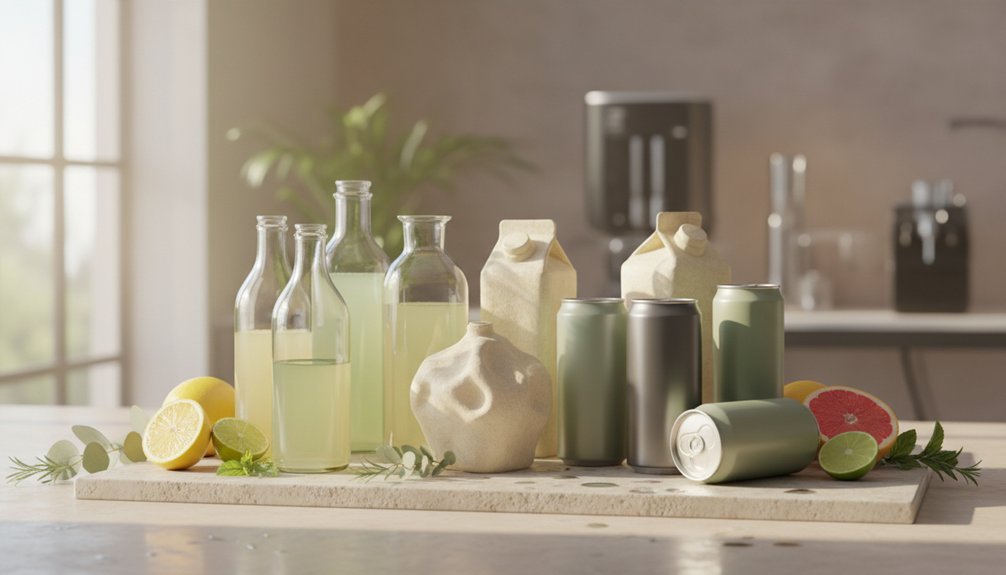
Sustainable beverage packaging solutions cut waste and emissions through lightweight, recyclable, and reusable formats. You can compare options with life cycle assessments that measure materials, energy, water, transport, and end-of-life impacts. Choose durable containers that protect freshness and fit local recovery systems; use refill programs where collection, washing, and return logistics work efficiently. Plant-based materials may help when sourcing and disposal pathways are sound. Advances in mono-material designs, tracking, and clear labeling are shaping what comes next.
Key Takeaways
- Use lifecycle assessments to compare packaging by emissions, energy, water, material use, and end-of-life impacts.
- Choose lightweight, right-sized, recyclable or responsibly sourced materials that protect beverage quality and suit local recovery systems.
- Expand refill and reuse programs with durable containers, convenient returns, efficient transport, and reliable washing and sanitation.
- Improve recycling through compatible packaging, clear labels, clean material separation, and accessible collection infrastructure.
- Scale industry-wide standards and digital tracking to strengthen consumer participation, monitor container safety, and support circular packaging systems.
What Makes Beverage Packaging Sustainable?
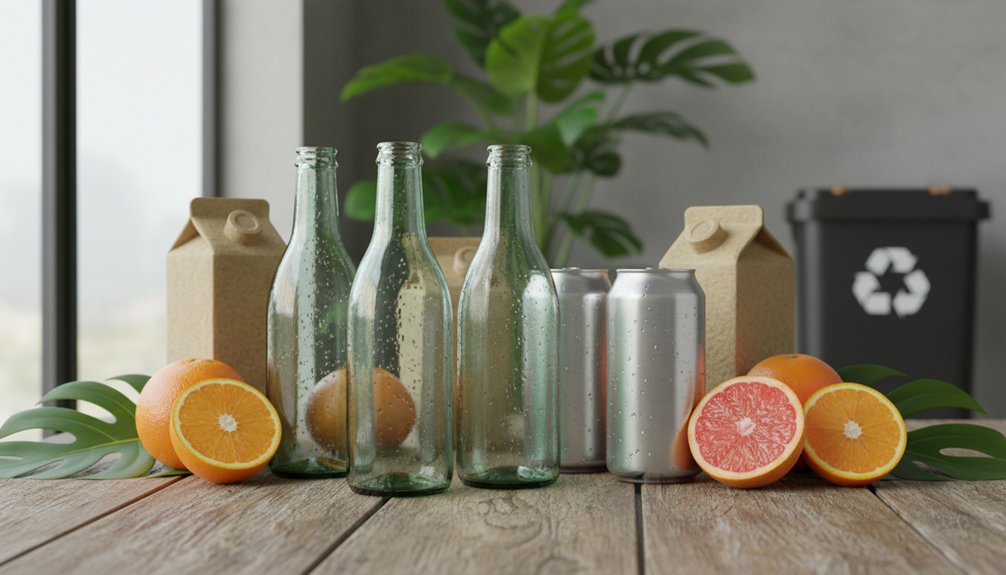
What makes beverage packaging sustainable isn’t just the material—it’s the impact of the package across its life cycle. You can shape that impact through Eco friendly design: right-size containers, reduce unnecessary layers, and choose components that protect product quality with fewer resources.
Lightweight formats can lower transport emissions, while refillable or recyclable structures help keep valuable materials in circulation. But performance matters, too. Your package must resist damage, preserve freshness, and work with available collection and processing systems.
Clear labels can guide correct disposal, and Consumer awareness helps turn thoughtful design into better everyday choices. When you align material efficiency, product protection, reuse potential, and practical end-of-life pathways, you create packaging that supports both business needs and environmental goals—without asking consumers to sacrifice convenience or safety.
How Can You Compare Packaging’s Environmental Impact?
To compare packaging’s environmental impact, assess each format across its full life cycle—from raw material extraction and manufacturing to transport, use, and end-of-life processing. Apply a consistent life-cycle assessment (LCA) boundary so you’re comparing equivalent beverage volumes and functions.
Track greenhouse-gas emissions, energy and water use, material intensity, and pollution; then examine how recycled content, renewable energy, and lightweight design change results. Eco friendly manufacturing can reduce production impacts, but it shouldn’t obscure burdens shifted to sourcing or disposal.
Include transport distance, package density, and damage rates, since these factors affect emissions per delivered serving. Consumer behavior also shapes outcomes: consider whether people prefer certain formats, how they store products, and whether packaging protects beverage quality.
Use transparent data, regional scenarios, and sensitivity analysis to identify trade-offs and select the lowest-impact option.
When Should You Recycle or Reuse Beverage Containers?
Choose reuse when a beverage container is designed for repeated trips and local systems can collect, wash, and refill it efficiently. Recycle it when reuse isn’t practical or the container has reached the end of its service life. Your decision should reflect the full Container lifecycle, including transport, cleaning, return rates, and material recovery.
Reuse works best when you can return containers conveniently and the system keeps them circulating through many safe, verified trips. If collection is unreliable, contamination is likely, or refill infrastructure is unavailable, follow local recycling instructions instead.
Empty containers, separate components when required, and keep recyclables clean so processors can sort them effectively. Your Consumer habits help determine which model performs better: choose accessible return programs, avoid unnecessary single-use packaging, and recycle promptly when a container can’t be reused.
Can Plant-Based Materials Replace Beverage Plastics?
Plant-based materials can replace some beverage plastics, but they aren’t a universal drop-in solution. You can choose Plant based alternatives such as polylactic acid (PLA), molded fiber, or bio-based polyethylene, depending on the drink, filling process, and required shelf life.
Bio-based polyethylene matches conventional plastic’s performance, yet it isn’t biodegradable; PLA may need industrial composting facilities that your customers can access. Paper-based cartons can reduce fossil feedstock, but coatings and barrier layers affect recyclability.
To select responsibly, you’ll need to assess material sourcing, food-contact safety, carbon impacts, and end-of-life infrastructure. Clear disposal labels help consumers route packaging correctly.
Emerging biodegradable solutions can serve specific applications, but they won’t solve litter or replace collection systems. Pilot formats, test barrier performance, and verify claims through lifecycle assessment before scaling.
How Does Lightweight Packaging Save Resources?
By reducing package mass, lightweighting cuts the material needed for each beverage unit and can lower transport fuel use. Lightweight design can trim bottle walls, cap weight, or secondary packaging while preserving the structure needed for filling, stacking, and distribution.
You’ll use less resin, glass, or aluminum per container, reducing demand for extracted and processed resources. Lower mass also lets you move more finished beverages per load, potentially cutting trips and freight emissions across your supply chain.
Material reduction works best when engineers model pressure, impact, and handling loads, then validate thinner formats through production trials. You can pair precise geometry with recycled feedstock to amplify savings without adding unnecessary components.
Track material intensity and transport data over time; these metrics show where redesign delivers measurable resource gains and help guide continuous packaging improvements at scale.
How Do You Choose Safe, Practical Packaging?
Resource savings matter only when packaging protects the beverage and performs reliably from filling through use. Start with product-specific requirements: acidity, carbonation, light sensitivity, shelf life, and distribution conditions. Then match materials and barrier properties to those demands, so you prevent leaks, contamination, flavor loss, and premature spoilage without adding unnecessary layers.
Packaging design should also support efficient filling, secure sealing, stacking, transport, and convenient opening. Check that closures and contact materials meet applicable food-contact standards, and validate performance through migration, seal-integrity, and shelf-life testing. Consumer safety depends on clear handling instructions, tamper evidence, and reliable protection across the supply chain.
Consider whether local systems can collect and process each component; compatible labels, caps, and materials improve recovery. Pilot the package on existing equipment, measure damage and waste, and refine specifications before scaling. This approach balances protection, usability, and resource efficiency.
What’s Changing in Sustainable Beverage Packaging?
You’re seeing recyclable materials evolve through improved barrier performance, lighter structures, and designs that fit existing recovery streams.
Refillable packaging systems are also advancing with durable containers and return logistics that support repeated use.
Together, these innovations can help you reduce material demand and packaging waste.
Recyclable Material Innovations
As recycling systems evolve, beverage packaging is shifting toward materials designed to re-enter production streams with less waste. You’ll see lightweight, mono-material bottles and cans that simplify sorting and improve recovery rates.
Advanced barrier layers now protect flavor while remaining compatible with established recycling processes, reducing the need for mixed-material structures.
Manufacturers are also testing plant-based polymers and recycled-content resins, helping you choose packages with lower reliance on virgin resources.
Biodegradable coatings can add product protection, but they must be designed not to contaminate recycling streams.
Clear labeling and standardized material identification help you sort packaging correctly and support efficient processing.
These innovations strengthen a Circular economy by keeping valuable materials in circulation. When you select packaging engineered for recyclability, you encourage investment in better collection, sorting, and reprocessing infrastructure.
Refillable Packaging Systems
When you return a bottle through a refill system, it can be cleaned, inspected, and reused instead of recycled after one trip. You help extend its service life and reduce demand for virgin materials, while brands can lower packaging waste and emissions across distribution.
Today’s systems pair durable containers with standardized formats, reverse logistics, and digital tracking. Sensors and batch records help operators monitor container cycles, verify sanitation, and identify damage before refilling.
Convenient collection points and clear return instructions make consumer engagement essential to achieving high recovery rates.
An innovative design must balance strength, weight, cleanability, and user appeal. Brands also need efficient washing infrastructure and reliable transport to keep each loop resource-conscious.
When you choose products with practical return options, you support packaging models that replace single-use habits with measurable, repeatable reuse. Industry-wide standards can make these systems easier to scale.
Conclusion
The future of beverage packaging isn’t defined by one material, but by smarter choices across sourcing, production, transport, and recovery. Compare life-cycle impacts, prioritize safe designs, and match reuse or recycling systems to local infrastructure. Lightweight formats and responsibly sourced plant-based materials can help reduce resource use when they’re fit for purpose. Think of packaging as a system, not a wrapper: your decisions can help keep materials circulating and move the industry toward lower-impact solutions.