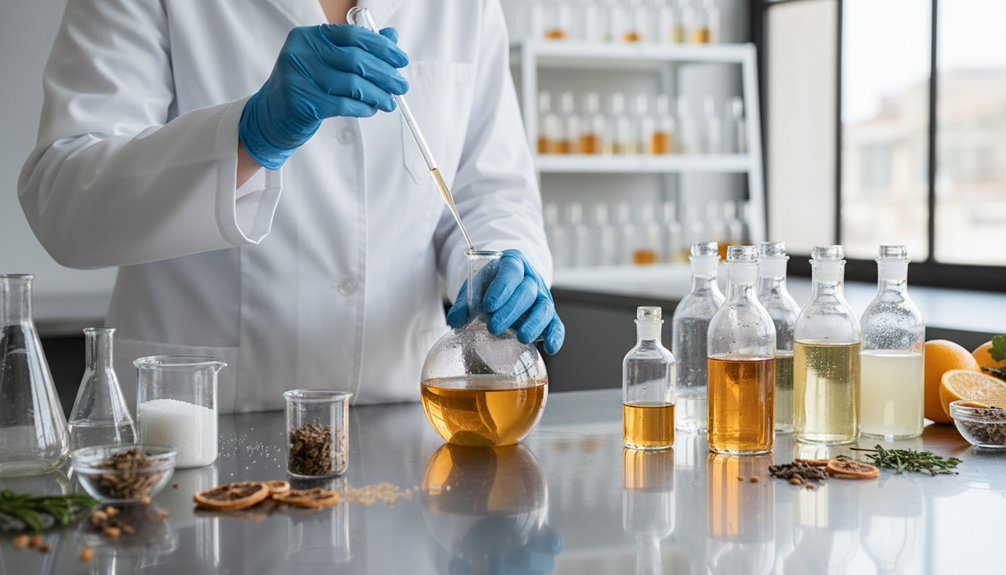
To maximize beverage shelf life, first set measurable safety and quality targets for the intended storage conditions. Choose clean, consistent ingredients, then control pH as one part of a validated microbial safety plan. Select preservatives that fit your formulation and label requirements without compromising flavor. Apply a process validated for the product’s composition and target microbes, and use packaging that limits oxygen, light, and leakage. Test sealed samples under realistic conditions, monitor stability, and refine your controls as results emerge.
Key Takeaways
- Set measurable safety and quality targets based on the beverage’s intended storage, distribution, and consumption conditions.
- Select sound, low-microbial-load ingredients and use validated preservation hurdles, including appropriate pH and preservatives.
- Validate heat treatment or aseptic processing against the beverage’s composition and target microorganisms.
- Choose compatible packaging that protects against contamination, light, oxygen, leakage, and handling stresses.
- Confirm shelf life through realistic stability testing, monitoring microbial safety, sensory quality, and packaging integrity over time.
Define Your Beverage’s Shelf-Life Target
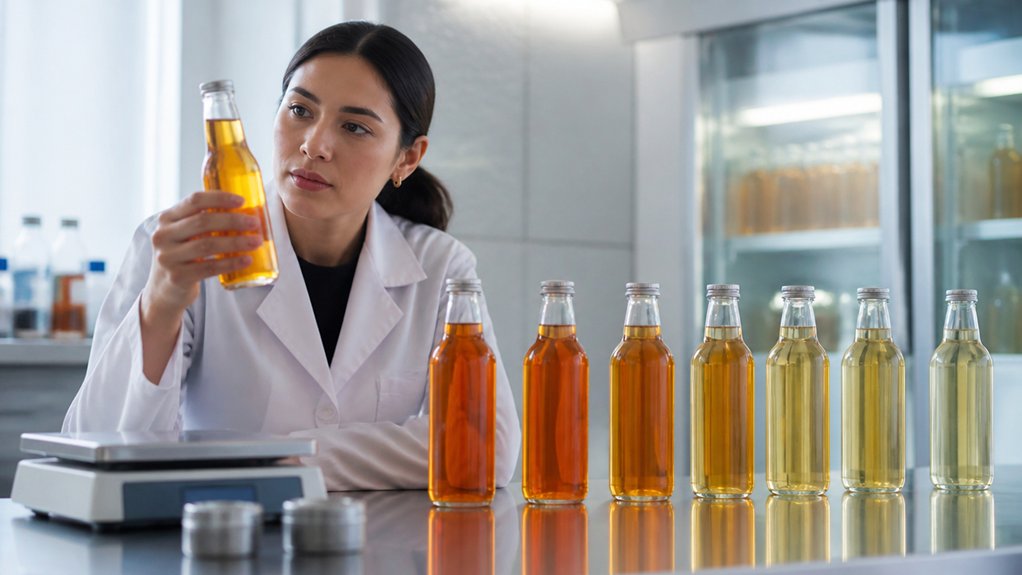
Before you choose a preservation method, define how long the beverage must remain safe and meet your quality standards. Set a target shelf life based on your distribution conditions, expected storage temperature, and time between production and consumption.
Specify measurable acceptance limits for safety and quality, including microbial criteria, pH where relevant, color, aroma, and taste. Your target should reflect how consumers will store and use the product, not just ideal laboratory conditions.
Then validate the target through stability testing in the intended package. Track changes at scheduled intervals under realistic and, where appropriate, accelerated conditions.
Assess flavor consistency alongside packaging durability, such as seal integrity and resistance to leakage or deformation. Use results to establish a defensible best-before date and storage instructions.
If testing shows quality or safety limits fail early, revise the target before selecting preservation controls or making commercial claims.
Choose Ingredients That Resist Spoilage
Once you’ve set a shelf-life target, choose ingredients with properties that help limit microbial growth and quality loss. Select stable raw materials with low initial microbial loads, consistent specifications, and minimal exposure to contamination during handling.
For fruit beverages, use sound, properly stored fruit or validated concentrates; damaged produce can introduce spoilage organisms and enzymes that degrade flavor and color.
Consider fermentation techniques when they suit your product: selected cultures can create inhibitory compounds and improve stability, but you’ll need to verify performance in the finished formulation.
Natural preservative selection also requires evidence. Ingredients such as rosemary extract may slow oxidation, while certain plant-derived antimicrobials can inhibit spoilage organisms; effectiveness depends on dose, matrix, and processing.
Check regulatory limits, supplier data, and sensory impact, then test representative batches throughout storage before finalizing your ingredient list and specifications.
Control Microbial Growth With pH
Measure pH with a calibrated meter, using a representative, well-mixed sample at a consistent temperature.
Set a formulation target below the relevant limit to account for ingredient variation and measurement uncertainty.
Verify the final product after processing and during stability trials, since buffering ingredients can shift pH.
Treat microbial inhibition as one hurdle, not a substitute for a validated process and appropriate testing.
Balance Preservatives, Flavor, and Label Goals
Choosing a preservative system means balancing microbial protection with flavor, ingredient compatibility, and label goals. Match preservatives to your beverage’s pH, water activity, and target organisms; efficacy depends on the formulation, not just the ingredient. Benzoates and sorbates, for example, work best in acidic products, but their levels and permitted uses vary by market.
Test candidate systems in the finished drink, since minerals, proteins, sweeteners, and packaging interactions can alter performance.
Assess sensory impact at intended use levels. A preservative’s bitterness or aroma may require flavor enhancement, but added flavors shouldn’t mask deterioration or compromise stability. If you favor familiar ingredients or a shorter ingredient list, verify that your alternative still provides adequate protection.
Confirm label compliance against applicable regulations, including naming and maximum-use limits. Document specifications and supplier data, then validate the chosen formulation through appropriate shelf-life studies.
Choose Processing That Controls Spoilage
To control spoilage, choose a heat treatment validated for your product’s pH, composition, and target microorganisms.
If you use aseptic processing, sterilize the product and packaging separately, then fill and seal them in a controlled sterile environment.
Verify each step with process records and microbiological testing.
Select Effective Heat Treatment
Set time and temperature using the beverage’s coldest point, not just the heater’s reading.
Measure pH and assess viscosity, particulates, and heat resistance, since these affect microbial lethality.
Use validated schedules and calibrated sensors, then verify performance with appropriate microbial or process testing.
Track quality markers, too: excessive heating can damage nutrients, aroma, and taste.
Choose the least severe process that reliably meets safety requirements.
Apply Aseptic Processing
Once heating is validated, aseptic processing can prevent recontamination and extend shelf life without relying on preservatives. You’ll need to sterilize the product, packaging, and equipment separately, then combine them in a controlled environment.
Aseptic sterilization must deliver the required microbial reduction while protecting flavor, color, and nutrients; validate time, temperature, and flow conditions for your specific beverage.
Next, verify that sterile filling processes maintain barriers against contamination. Use validated cleaning and sterilization cycles, monitor critical parameters, and test package seals for integrity.
Even a small leak or contaminated filler can compromise an entire production run. Establish environmental monitoring and routine microbiological testing, and document corrective actions when results fall outside limits.
Match the process to your product’s pH, viscosity, and particulates. Confirm shelf life through real-time and accelerated studies under intended storage conditions.
Protect Beverage Quality With the Right Packaging
Choose packaging materials that limit oxygen and moisture transfer to preserve your beverage’s flavor and stability.
Use opaque or UV-blocking containers to reduce light-driven degradation.
Check that seals are airtight, since oxygen ingress can accelerate oxidation and spoilage.
Choose Protective Materials
Packaging determines how well a beverage resists oxygen, light, moisture loss, and contamination during storage. Select a material whose barrier performance matches your product’s sensitivity and distribution conditions.
For oxygen-sensitive drinks, consider glass, metal, or high-barrier multilayer structures. For carbonated beverages, verify that the package retains carbon dioxide under expected pressure and temperature. Check closure liners and seals, too: small leaks can undermine an otherwise effective container.
Packaging innovations, including improved coatings and barrier films, can extend protection while reducing package weight. Compare options using shelf-life testing with your actual formulation, filling process, and storage profile rather than relying solely on supplier data.
Assess Material sustainability alongside performance: evaluate recyclability, recycled content, and material use within your local waste system. Your choice should protect quality without creating avoidable packaging burdens.
Limit Light Exposure
How much light reaches a beverage depends largely on its container. Light can trigger oxidation and photochemical reactions that degrade flavor, color, vitamins, and other sensitive compounds. Riboflavin, for example, can promote off-flavor development in exposed drinks.
Choose packaging that blocks wavelengths relevant to your product, rather than relying on appearance alone.
Assess packaging opacity and UV protection against the beverage’s ingredients and expected retail conditions. Amber glass can filter much ultraviolet and blue light, while opaque cartons and cans provide broader shielding. Clear containers offer little protection unless you add a light-blocking sleeve or secondary package.
Test samples under realistic store lighting and compare sensory quality and nutrient retention over time. If consumers expect a transparent product, balance visibility with protection by selecting tinted material and limiting display exposure.
Your packaging choice can slow light-driven deterioration and help preserve the beverage’s intended quality.
Ensure Airtight Seals
An airtight seal limits oxygen ingress, which can drive oxidation, fade color, and alter aroma and flavor. Choose packaging with an oxygen-transmission rate suited to your beverage’s sensitivity and intended shelf life. Glass and suitable barrier-coated cans offer strong protection; some plastic bottles allow more oxygen through. Check that closures match the container finish and resist leakage during storage and transport.
Use airtight containers and inspect seals for defects, inconsistent torque, or contamination. A simple leak test can reveal closure failures before distribution. For products that tolerate it, vacuum sealing or inert-gas flushing can reduce oxygen in the headspace, but verify that the process won’t damage carbonation or package integrity.
Validate performance with oxygen measurements and shelf-life testing under realistic conditions. Reassess suppliers and sealing equipment when materials, line settings, or product formulations change.
Test Shelf Life Under Realistic Conditions
Because storage conditions can change a liquid’s stability, test samples under the temperatures, light exposure, and handling they’re likely to encounter. Use representative packaging and preserve the airtight seals you’ve specified; opening or transferring samples can distort results.
Include realistic transport vibration and temperature cycling when distribution makes those stresses likely. Before testing, verify Sensor calibration for instruments that measure pH, color, dissolved oxygen, or other relevant attributes.
Define acceptance limits for safety, flavor, aroma, appearance, and texture, then assess samples at planned intervals using consistent methods. Compare results with a properly stored control to identify changes linked to exposure.
Use consumer testing, where appropriate, to determine whether detectable sensory changes matter to buyers. Document methods, deviations, and findings so you can support a defensible shelf-life claim and refine the formulation or package if needed.
Set Storage Conditions and Monitor Stability
Set storage conditions that reflect the liquid’s intended use and likely exposure, including temperature, light, humidity, and container orientation.
Use labeled chambers to reproduce expected distribution and consumer environments, plus justified temperature excursions.
Track actual conditions with calibrated data loggers; don’t rely on set points alone.
Assess Temperature stability by measuring product temperature and checking for phase separation, sediment, color shifts, and sensory changes at defined intervals.
Protect light-sensitive formulas with suitable packaging or controlled illumination.
Maintain humidity control to limit label failure, closure corrosion, and moisture loss, especially during long-term storage.
Keep containers upright unless real-world handling suggests another orientation, and document that choice.
Test unopened and, where relevant, opened packages.
Compare results against specifications and baseline data, investigate trends, and revise storage guidance when evidence indicates a risk.
Conclusion
A beverage’s shelf life isn’t a date you can wish into place; it’s the result of choices you can control. Set a realistic target, select stable ingredients, manage pH and preservatives, and validate processing and packaging with storage tests. Then monitor the product under the conditions customers will actually use. Ironically, the longer your drink lasts, the less you should rely on hope: measure, document, and adjust. That’s how you protect both quality and trust.