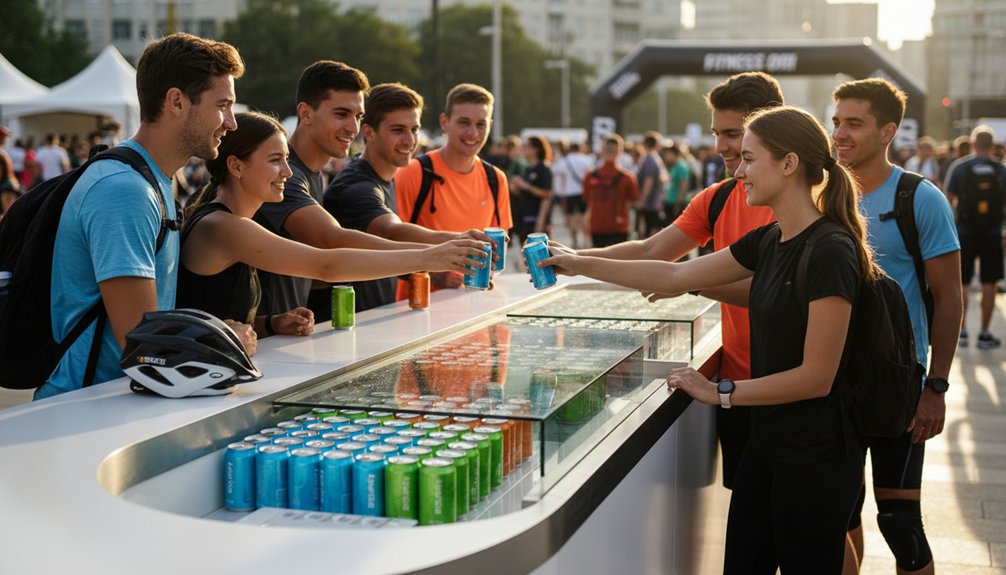
Energy drink brands capture new markets by matching your needs with segmented formulas, regional flavors, compact formats, and targeted digital campaigns. You’ll find products through retail, online marketplaces, subscriptions, events, and creator partnerships. Brands also use transparent caffeine labeling, functional ingredients, and recyclable packaging to build trust and stand out. By positioning drinks for work, study, workouts, or gaming, they fit more routines. The following sections explain how these strategies shape consumer choice and market growth.
Key Takeaways
- Develop targeted product lines with low-sugar options, regional flavors, and convenient package sizes for distinct consumer groups.
- Reach new audiences through creators, gaming streams, live events, influencer partnerships, and collaborations with entertainment, sports, or fashion brands.
- Expand access through supermarkets, convenience stores, gyms, online marketplaces, subscriptions, vending machines, and direct-to-consumer channels.
- Differentiate products with appealing flavors, functional ingredients, clear caffeine levels, and transparent, evidence-based wellness claims.
- Build trust and repeat purchases with compliant safety labels, sustainable packaging, culturally relevant limited editions, and formats suited to everyday routines.
How Are Energy Drink Brands Reaching New Audiences?
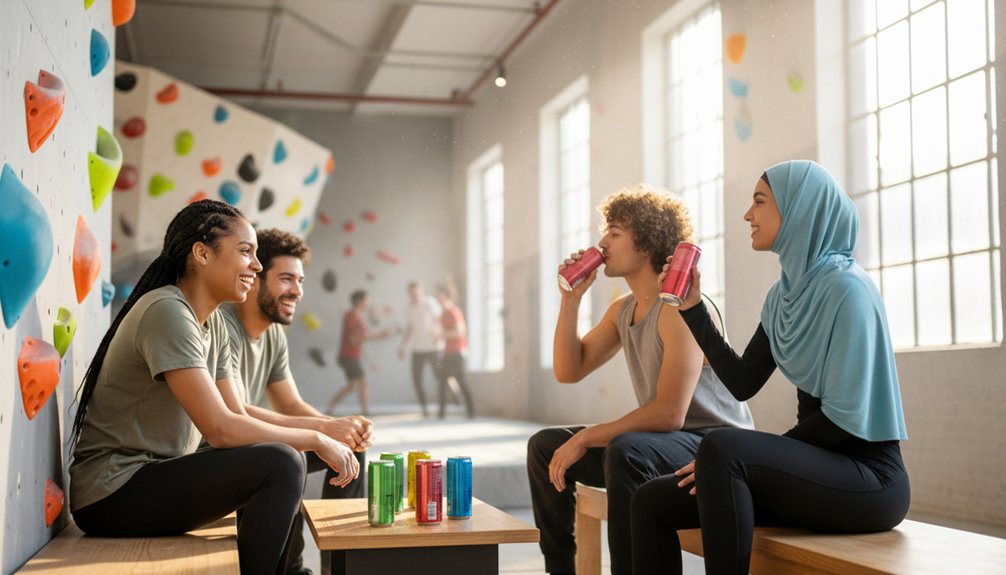
Energy drink brands are reaching new audiences by tailoring products, messaging, and distribution to specific consumer groups. You can see this strategy in segmented product portfolios: brands develop low-sugar formulas, compact packaging, or flavors aligned with distinct retail channels and local preferences.
They also use audience data to refine campaign timing, creative formats, and placement across digital platforms.
Alternative marketing helps you encounter brands through gaming streams, creator content, live events, and niche communities rather than conventional ads. These channels let companies test messages, measure engagement, and adjust investment quickly.
Brand collaborations extend reach by pairing energy drinks with entertainment, sports, fashion, or technology properties. A well-matched partnership gives you a relevant point of entry while helping brands access established fan networks.
Retail partnerships, targeted sampling, and localized distribution then convert awareness into availability across emerging markets.
Why Are More People Choosing Energy Drinks?
As brands extend their reach, more consumers are choosing energy drinks for convenient, fast-acting stimulation that fits work, study, exercise, and gaming routines. You may also value portable formats, predictable caffeine content, and flavors that make energy support easy to personalize.
Product innovation now extends beyond classic formulations, with options featuring varied caffeine levels, functional ingredients, and reduced-sugar profiles. These choices let you match a product to your preferences without treating every occasion alike.
Market segmentation helps brands identify distinct motivations, while branding strategies position products around lifestyle, performance, or taste. Digital discovery and social recommendations can reinforce those signals, helping you compare options and find a relevant fit.
As competition intensifies, brands use consumer insights to refine formulations and messaging, making energy drinks more visible, differentiated, and accessible across everyday occasions.
What Do Busy Professionals Want From Energy Drinks?
When your workday spans meetings, deadlines, and shifting priorities, you want an energy drink that’s convenient, consistent, and easy to fit into your routine. You need portable formats that travel well, resealable cans or bottles, and clear labeling that helps you compare serving sizes and caffeine levels quickly.
Reliable availability matters, too: digital subscriptions, workplace vending, and retail pickup can keep your preferred option within reach.
You may also seek healthy alternatives that align with your wellness goals without sacrificing convenience or taste. Brands can serve this demand with transparent product information and flexible choices across pack sizes.
Sustainable packaging adds value when you’re weighing purchases, especially if materials are recyclable and disposal instructions are clear. These practical features help you choose confidently, reduce friction in your day, and build repeat purchasing habits.
Which Ingredients Are Shaping New Energy Drinks?
As brands target new markets, they’re rethinking energy drinks around ingredients that offer more than a caffeine boost. You’ll find formulas pairing moderate caffeine with L-theanine, which may support alertness while helping smooth stimulation.
Adaptogens such as ashwagandha and rhodiola also feature in products aimed at consumers seeking stress resilience, though evidence and permitted claims vary by market.
Natural ingredients, including green tea extract and guarana, give brands recognizable sources of energy, while electrolytes and B vitamins help position products around hydration and metabolism.
Prebiotic fibers and probiotics extend innovation into digestive wellness. These additions create functional benefits that can distinguish a product on crowded shelves and support targeted formulations for different routines.
As you compare options, check ingredient amounts, clinical support, and local labeling rules—not just front-of-pack claims.
How Do New Flavors Broaden Energy Drink Appeal?
When you match flavor profiles to emerging taste preferences, you can attract consumers beyond traditional energy drink buyers.
Novel combinations and lighter, more invigorating notes give you new ways to differentiate products and encourage trial.
Culturally informed flavors can also help you connect with regional markets and broaden brand appeal.
Attracting New Taste Preferences
New flavors help energy drink brands reach consumers who reject the category’s traditional sweet, citrus-heavy profiles. By mapping regional preferences and emerging food trends, you can identify taste gaps worth targeting.
Flavor fusion—such as botanical notes paired with familiar fruit—creates differentiated profiles without abandoning recognizable cues. This approach lets you serve consumers seeking complexity, lower perceived sweetness, or culturally relevant ingredients.
Your product team can use sensory testing to measure aroma, acidity, bitterness, and finish, then refine formulations against distinct preference segments. A carefully engineered sensory experience strengthens trial intent and gives shoppers a clear reason to switch from established options.
You can also use limited launches to validate demand before scaling production. When flavor strategy aligns with audience insights, your portfolio expands beyond conventional tastes and supports more precise positioning across new consumer markets.
Refreshing Flavor Innovations
Flavor innovation broadens energy drink appeal by giving distinct consumer segments a reason to try the category. You can reach beyond familiar profiles by pairing crisp citrus with botanical notes, tart berries with cooling mint, or tropical fruit with subtle spice. These flavor pairings create differentiated products while helping you map taste concepts to specific occasions and consumer preferences.
Layered aromas, calibrated sweetness, and controlled acidity shape sensory experiences that make each sip feel invigorating rather than heavy. You can also use flavor testing and purchase data to refine formulas, identify emerging preferences, and reduce launch risk.
Limited editions invite trial, while successful profiles can anchor year-round lines. By balancing novelty with drinkability, you give consumers a clear reason to switch, repurchase, and explore more of your portfolio.
Expanding Cultural Appeal
As brands enter new markets, culturally informed flavor choices can make energy drinks feel more relevant to local tastes and traditions. When you pair familiar ingredients with functional formulations, you lower trial barriers and give consumers a reason to choose your product over established alternatives.
Cultural integration works best when you research regional preferences, validate concepts with local panels, and adapt sweetness, acidity, and aroma to match expectations. You can also draw on Global influence, blending recognizable profiles from different food cultures while preserving a clear brand identity.
Limited releases let you test demand before expanding production, while retail and digital data reveal which flavors encourage repeat purchases. By treating flavor as a market-entry tool—not just a novelty—you build relevance, strengthen consumer trust, and extend your brand’s appeal across diverse audiences.
What Do Wellness-Minded Shoppers Look For?
Wellness-minded shoppers assess energy drinks by more than their caffeine hit: they look for transparent ingredient lists, moderate stimulant levels, functional benefits, and credible claims.
When you compare options, you’ll want precise caffeine amounts and clear explanations of botanical extracts, sweeteners, and other active ingredients. This transparency supports mindful consumption and helps you match a product to your routine, sensitivity, and performance goals.
You may also evaluate whether added electrolytes, vitamins, or adaptogens offer evidence-based value rather than a long list of unverified promises. Brands can earn your trust by substantiating claims, disclosing serving sizes, and avoiding language that implies medical outcomes.
For you, holistic wellness means balancing energy with hydration, sleep, and nutrition—not treating a drink as a shortcut. That expectation creates room for formulations built around measured benefits and credible science.
How Does Packaging Help Energy Drinks Stand Out?
When shoppers scan a crowded cooler, packaging can turn a brand’s positioning into an immediate buying cue. You can use color, typography, and can geometry to signal energy, function, and audience fit within seconds.
Strong Visual branding builds recognition across product lines, while clear hierarchy helps shoppers identify flavor, caffeine level, and key ingredients without decoding clutter. Innovative packaging can also improve grip, portability, and recyclability, giving your product practical value beyond shelf appeal.
Consider matte finishes, tactile details, or high-contrast accents to distinguish a formula without overstating its benefits.
Consistent design links each variant to your brand, but distinct color coding speeds selection and supports line extension. When packaging aligns visual cues with product performance, you make the brand easier to notice, understand, and remember in a crowded category.
Where Can Consumers Find New Energy Drink Brands?
Distinctive packaging can win attention, but distribution determines whether shoppers can act on that interest. You’ll find emerging energy drinks through a mix of physical and digital channels, each offering brands a distinct route to market.
Retail partnerships place products in supermarkets, convenience stores, specialty shops, and gyms, where you can compare options alongside established labels. Targeted shelf placement and regional pilots help brands test demand before expanding distribution.
Online marketplaces and direct-to-consumer storefronts give you access to limited releases and broader flavor ranges, while brands use sales data to refine availability.
Influencer collaborations can introduce products through credible creators and link discovery directly to purchase pages. You may also encounter new labels at festivals, sporting events, and pop-up sampling activations.
These channels let you evaluate unfamiliar brands where discovery and purchase converge.
How Do Brands Fit Energy Drinks Into Daily Routines?
Brands fit energy drinks into daily routines by positioning them around specific moments, such as a morning commute, a workout, or an afternoon slump. For you, this occasion-based approach makes a product easier to discover and integrate into familiar habits.
Brands can use formats such as compact cans for travel, resealable containers for extended activities, and varied flavors to match different preferences.
In Morning routines, targeted messaging can present an energy drink as a convenient option alongside breakfast or a commute, while digital reminders and subscription offers support repeat purchasing.
Around workouts, brands may connect products with training schedules and retail placements near fitness venues.
Social occasions create another use case: shareable multipacks and limited editions can encourage group trial.
How Do Brands Address Energy Drink Safety Concerns?
As you assess new energy drink options, check the label for precise caffeine content per serving and container.
Brands can build trust by pairing transparent formulations with clear guidance on intake, timing, and who should avoid these products.
That safety clarity helps you make informed choices and supports market growth.
Caffeine Transparency
With energy drinks entering new markets, clear caffeine disclosure helps brands build trust and address safety concerns. When you show caffeine content per serving and container, you make comparisons easier across formats and regions.
Pair precise labeling with batch-level quality data so your claims reflect verified formulations, not marketing estimates. As you expand, map caffeine regulation across target markets and adapt labels to local requirements without obscuring core information.
Explain ingredient sourcing and formulation choices in product pages, giving shoppers a transparent view of what drives each blend. Digital tools can extend that visibility: QR codes may link to current specifications, testing summaries, and product updates.
Clear Safety Guidance
Clear safety guidance turns product information into practical decisions for consumers and retailers. When you evaluate an energy drink, look for clearly stated caffeine amounts, serving sizes, age recommendations, and warnings about combining products. Brands can make these details easy to find through on-pack icons, QR-linked guidance, and consistent digital product pages.
They should align claims and labels with applicable Safety regulations across each market, then update materials as requirements change. Effective consumer education helps you understand how serving size, caffeine from other sources, and individual sensitivity affect intake.
Retailers also need concise staff resources and clear escalation steps for customer questions. By connecting verified formulation data with accessible guidance, brands reduce confusion, strengthen trust, and support responsible trial.
This approach turns safety communication into a market capability, not merely a compliance task.
Conclusion
You’re watching energy drink brands move beyond traditional buyers through sharper science, surprising flavors, standout packaging, and smarter retail reach. As brands respond to busy schedules, evolving tastes, and safety questions, they’re making energy drinks more relevant to more routines. The market’s next gains will come from clear ingredient communication, credible benefits, and convenient formats. Choose what fits your needs, check the label, and stay tuned: the most compelling innovations are still taking shape.