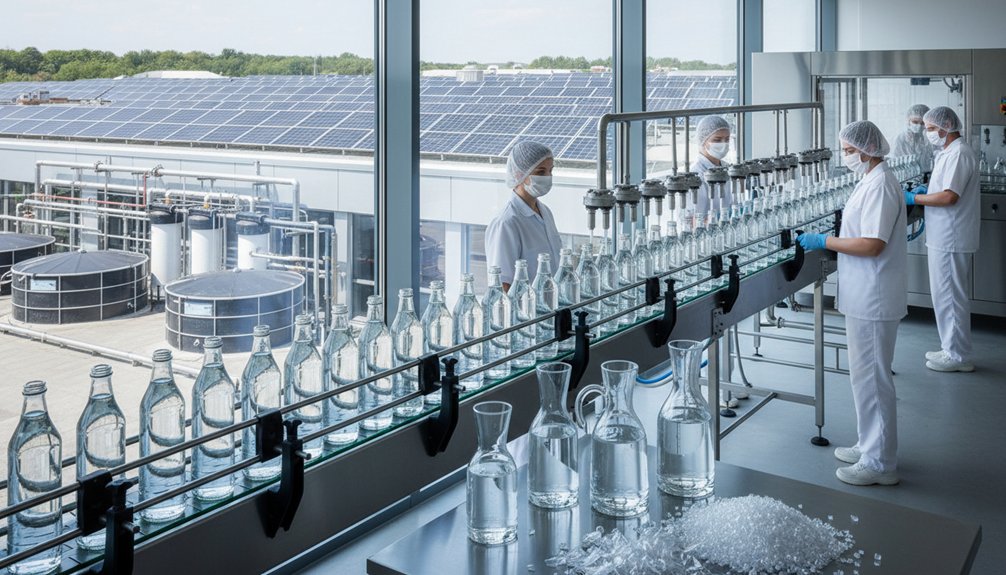
Bottled water production starts with treated spring, well, or municipal water, then moves through quality checks, filling, sealing, and distribution. To assess its sustainability, you’ll need to take into account water withdrawals, energy use, plastic packaging, and transport—not just the product itself. Local ecosystems can suffer when pumping exceeds recharge, while lightweight bottles, recycled resin, renewable power, and efficient routes can reduce impacts. Keep exploring to see how sourcing, packaging, and process improvements shape a lower-impact supply chain.
Key Takeaways
- Bottled water production requires careful sourcing, treatment, sanitation, and testing to ensure consistent quality and microbial safety.
- Unsustainable groundwater extraction can lower water tables, reduce streamflow, and harm ecosystems, especially during droughts.
- Plastic packaging and energy-intensive bottling and transport contribute to environmental impacts; lightweight, recycled materials and efficient logistics can reduce them.
- Renewable energy, efficient equipment, water reuse, and real-time monitoring help cut resource use, waste, and emissions.
- Recycling, reusable containers, and refill stations can reduce packaging waste, though contamination and limited processing capacity remain challenges.
How Bottled Water Is Produced
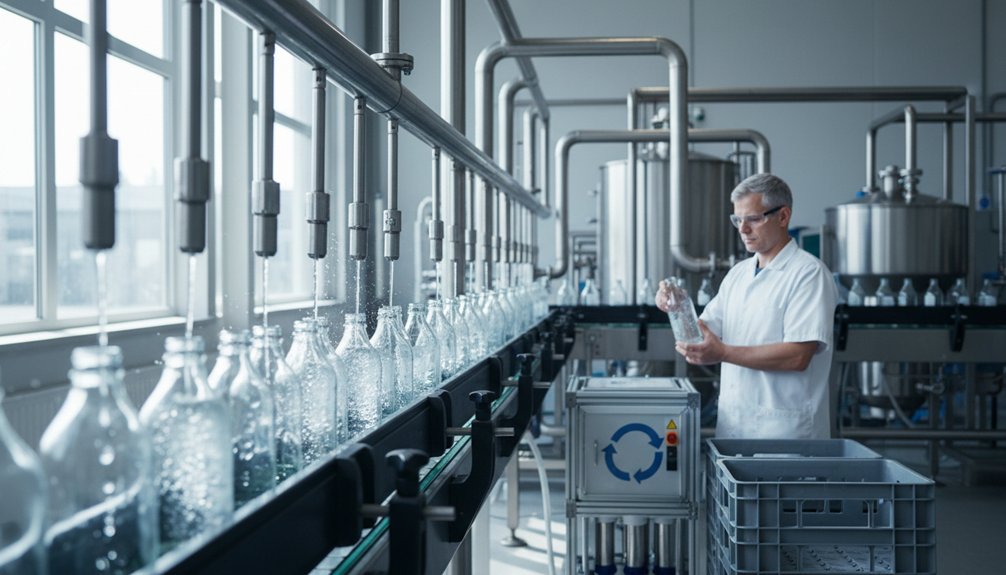
Bottled water production begins with a source—such as a spring, well, or municipal supply—and a treatment process tailored to its quality and intended use. You’ll see operators assess incoming water, then apply Water purification methods such as filtration, reverse osmosis, ultraviolet treatment, or ozonation. The selected combination removes targeted impurities while preserving the product’s required characteristics.
Sensors and laboratory testing support Quality control throughout production. You’ll find teams checking microbial safety, chemical parameters, taste, and clarity against regulatory and company standards. Automated systems can flag deviations quickly, helping staff correct issues before filling.
Once approved, water moves through sanitized equipment into bottles, which are capped, labeled, and inspected. Modern lines use precise filling controls and traceability data to reduce defects and improve process efficiency. Reusable monitoring systems and optimized treatment can also help you limit avoidable waste.
Which Resources Bottled Water Uses Most
To evaluate bottled water’s resource footprint, look beyond the water itself: production relies most on packaging materials—especially plastic resin—along with energy for treatment, bottling, and transport.
You’ll also account for water extraction, which supplies both the product and, in some facilities, cleaning and processing needs.
Resin production can require fossil feedstocks and substantial energy, while bottle manufacturing adds heat demand and packaging waste.
Electricity powers filtration, disinfection, filling, refrigeration, and plant operations; fuel use rises when products travel long distances.
Caps, labels, cartons, and pallets add further material inputs.
To improve resource management, compare impacts per liter across packaging formats, recycled-content levels, energy sources, and delivery routes.
Lightweighting, renewable electricity, efficient equipment, and higher recycled-resin use can reduce demand.
Track these inputs together to identify meaningful savings without compromising product safety or quality.
How Water Sourcing Affects Local Ecosystems
Beyond packaging and energy use, bottled water’s ecological footprint depends on where companies source water and how much they withdraw. When you assess a spring or aquifer, compare extraction rates with seasonal recharge and the needs of nearby communities. Excessive pumping can cause Water depletion, lower groundwater levels, reduce streamflow, and dry wetlands that support native species.
These changes can intensify habitat disruption, especially during drought, when ecosystems have less capacity to recover. You can evaluate sourcing plans through watershed monitoring, transparent withdrawal data, and ecological flow thresholds. Companies that use adaptive limits and pause extraction when indicators worsen can reduce pressure on sensitive habitats.
Prioritizing replenished sources and engaging local water managers helps you protect biodiversity while maintaining reliable supply. Responsible sourcing treats each watershed as a living system, not an unlimited resource.
How Bottled Water Packaging Affects Its Footprint
Your packaging choice—from virgin PET to recycled plastic, glass, or aluminum—shapes a bottle’s material footprint.
You’ll also need to account for the energy and emissions generated during manufacturing.
At end of life, your design and local recycling systems determine whether materials return to production or become waste.
Packaging Material Choices
Packaging choices shape a bottled water product’s footprint from raw-material extraction through disposal. When you select a container, you influence its weight, material demand, transport efficiency, and recovery potential.
Lightweight PET uses less resin than heavier formats, while recycled PET can reduce reliance on virgin feedstock. Aluminum offers durability and established recycling systems, but its higher material mass and energy-intensive production affect comparisons.
Glass supports reuse where return networks work, yet its weight can increase transport requirements. You should assess each option using life-cycle data, local collection infrastructure, and realistic reuse rates rather than material labels alone.
Innovative container designs can reduce material use without compromising product protection. Biodegradable packaging may suit specific systems, but you’ll need to verify its sourcing, performance, and compatibility with available processing routes before choosing it.
Production and Disposal Impacts
A package’s footprint depends not only on its material but also on how manufacturers produce it and how communities manage it after use. When you assess production, consider energy for resin processing, bottle molding, filling, and transport. Lightweight designs can reduce material use, but they must still protect water quality and withstand handling. Manufacturers can cut emissions by using renewable electricity, efficient equipment, and recycled feedstock.
After use, your local collection system determines whether packaging becomes a resource or waste. Clear labeling and Recycling incentives can improve sorting and return rates, while deposit programs help capture valuable bottles. Eco friendly innovations, including refillable formats and bottles designed for easier separation, can reduce disposal burdens.
You can support progress by choosing recyclable packaging and following local sorting rules; producers and policymakers must build reliable recovery systems that close material loops.
What Happens to Bottled Water Packaging After Use
After you finish a bottle of water, its packaging can enter a recycling stream, be discarded, or escape into the environment. If you sort it correctly, your bottle may become feedstock for new packaging, textiles, or other products. Remove leftover liquid and follow local rules; caps and labels may require separate handling.
Recycling challenges include inconsistent collection, contamination, limited processing capacity, and plastics that lose quality after repeated cycles. When you place packaging in general waste, it may be landfilled or incinerated, depending on local systems.
Litter can travel through drains and waterways, where fragments persist and threaten wildlife. This environmental impact grows when packaging isn’t recovered.
You can reduce waste by choosing reusable containers, using refill stations, and checking municipal guidance. Better sorting data and recyclable design can also strengthen recovery systems.
How Bottled Water Gets From Plant to Store
Before bottling begins, you’ll see plants optimize water treatment, line efficiency, and energy use.
Automated systems package and load bottles to protect product quality while reducing material waste.
Then, route-planning technology guides retail deliveries toward fuller trucks and lower transport emissions.
Bottling Plant Preparation
Once a water source meets quality standards, the bottling plant prepares it for safe, efficient distribution. You’ll find operators verifying treatment settings, calibrating sensors, and confirming that pipes, tanks, and filters meet sanitation requirements.
Automated monitoring tracks flow, pressure, and water quality, helping you detect deviations before they interrupt production.
Plant maintenance keeps pumps and treatment systems efficient, reducing leaks, energy use, and unplanned downtime.
You’ll also rely on workforce training so staff can follow hygiene protocols, respond to alarms, and document checks accurately.
Digital records connect test results with operating conditions, strengthening traceability and supporting quick corrective action.
Before production begins, teams sanitize contact surfaces and validate cleaning procedures.
These preparation steps protect product integrity while helping your facility conserve resources and maintain consistent, dependable operations.
Packaging and Loading
With treatment systems validated, the line fills sanitized bottles, seals them, and applies labels and lot codes for traceability. You can then inspect each unit with vision systems that flag leaks, mislabels, and fill-level errors before packing.
Automated case packers group bottles into right-sized cartons, while palletizers build stable loads with minimal handling. Choose lightweight, recyclable packaging and eco-friendly labels to reduce material use without compromising protection.
Reusable containers can further cut waste when your operation supports return, washing, and refilling. Sensors verify pallet weight and dimensions, helping you optimize load density and prevent damage.
Secure each pallet with recyclable stretch wrap or reusable straps, then scan its identifier into inventory. This controlled handoff keeps products protected and traceable as they leave the plant for storage and onward distribution.
Retail Delivery Routes
How does bottled water move from plant to store efficiently? You coordinate dispatch, vehicle capacity, and store demand to keep every delivery precise.
Route optimization software combines traffic, distance, delivery windows, and road restrictions, helping you select efficient paths and avoid unnecessary mileage. Telematics track vehicle location and fuel use in real time, so you can adjust routes when conditions change.
You’ll improve retail delivery efficiency by consolidating orders, scheduling full loads, and sequencing stops to reduce empty returns. Match vehicle size to each route, and use lower-emission trucks where infrastructure allows.
Reusable pallets and digital proof of delivery can also cut material waste and paperwork. By analyzing fuel, service, and emissions data together, you can refine dispatch plans, meet retailer needs, and lower the environmental impact of moving bottled water from plant to shelf.
How Producers Can Reduce Energy, Waste, and Emissions
By optimizing each stage of production, bottled water producers can cut energy use, material waste, and greenhouse gas emissions without compromising product safety. You can install high-efficiency pumps, variable-speed motors, and heat-recovery systems to reduce electricity and thermal demand.
Pair these upgrades with real-time monitoring to identify leaks, idle equipment, and process bottlenecks. Renewable energy, including on-site solar and verified green power, can further lower operational emissions.
For waste reduction, you can lightweight bottles, increase recycled-content packaging where food-contact rules allow, and reuse process water in suitable applications. Precise filling controls limit product loss, while closed-loop systems capture and recycle packaging scrap.
Track energy, water, material, and emissions data per liter produced; use the results to set targets, verify progress, and guide continuous improvements across your facility.
Conclusion
Every bottle carries a footprint—from the spring or municipal source to the plant, package, truck, and bin. When you choose bottled water, you’re choosing a chain of resource use that can either strain ecosystems or move toward smarter design. Producers can cut that burden with efficient processes, renewable energy, lighter packaging, reuse, and better recycling systems. Like a watershed recovering after rain, each improvement can restore balance. The path ahead depends on measuring impacts, protecting local water, and making circular solutions practical at scale.